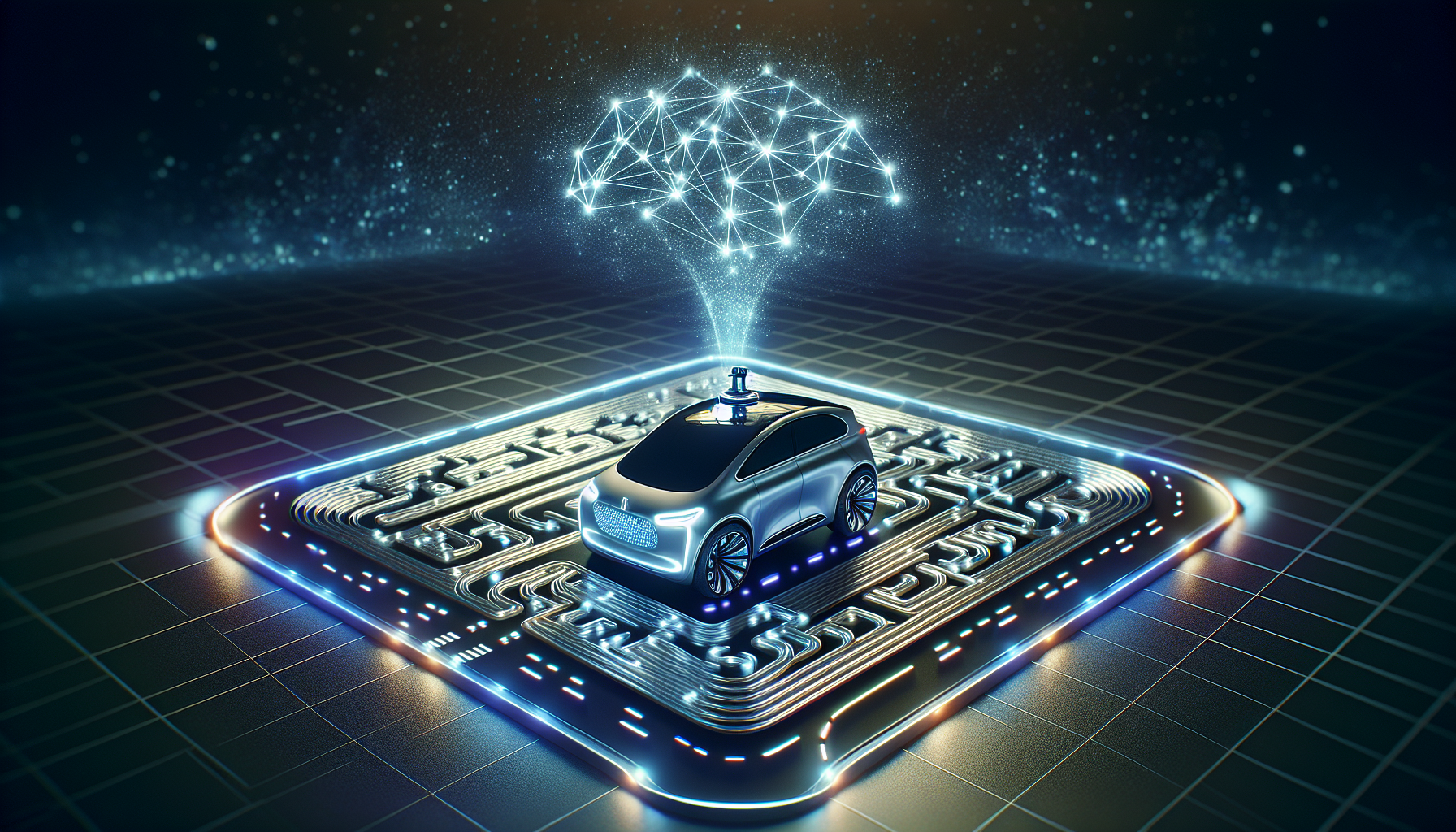
AI in Autonomous Vehicles: Navigating the Road Ahead – Insights into How AI and Machine Learning are Shaping the Future of Self-Driving Cars
Introduction
Autonomous vehicles (AVs), commonly referred to as self-driving cars, are transforming transportation. Through the integration of advanced Artificial Intelligence (AI) and machine learning algorithms, these vehicles aim to achieve safer, more efficient, and more sustainable mobility solutions. In this post, we will explore how AI is revolutionizing the field of autonomous driving by enhancing navigation systems, improving safety protocols, and creating adaptive learning environments.
The Role of AI in Autonomous Vehicles
Sensor Data Processing
AI systems in autonomous vehicles rely heavily on data from various sensors like cameras, radars, and LiDAR. These technologies collect vast amounts of data to help the vehicle understand its environment.
Data Interpretation
- Cameras: Recognize traffic signals, road signs, pedestrians, and other vehicles.
- Radar: Provides information about the distances and speeds of objects around the car.
- LiDAR: Creates precise 3D maps of the car ‘s surroundings.
Decision Making
AI algorithms process this sensor data to make real-time driving decisions. This includes:
- Navigating through traffic.
- Adjusting speed according to road conditions.
- Changing lanes and making turns safely.
Machine Learning in AVs
Machine learning models continuously learn from new data, improving their decision-making over time. This adaptivity is crucial in handling complex environments and unexpected situations.
Challenges in AI for Autonomous Vehicles
Despite significant advancements, integrating AI into autonomous driving presents unique challenges:
- Data Privacy: Protecting the data collected by AVs from breaches.
- Ethical Decisions: Programming vehicles to make moral decisions during unavoidable accidents.
- Regulatory Compliance: Adhering to varied automotive and safety laws across regions.
Future Trajectories
The evolving AI technologies are expected to propel the adoption and capabilities of autonomous vehicles further.
- Enhanced AI Algorithms: Improved learning algorithms for better safety and efficiency.
- Integration With Smart City Infrastructure: Vehicles communicating with traffic systems and other vehicles to optimize traffic flow and reduce congestion.
Conclusion
AI and machine learning are not just enhancing the capabilities of autonomous vehicles but are also setting the stage for a future dominated by intelligent transport systems. As we continue to overcome challenges, the road ahead for autonomous vehicles looks promising, offering myriad opportunities for innovation and improvement.