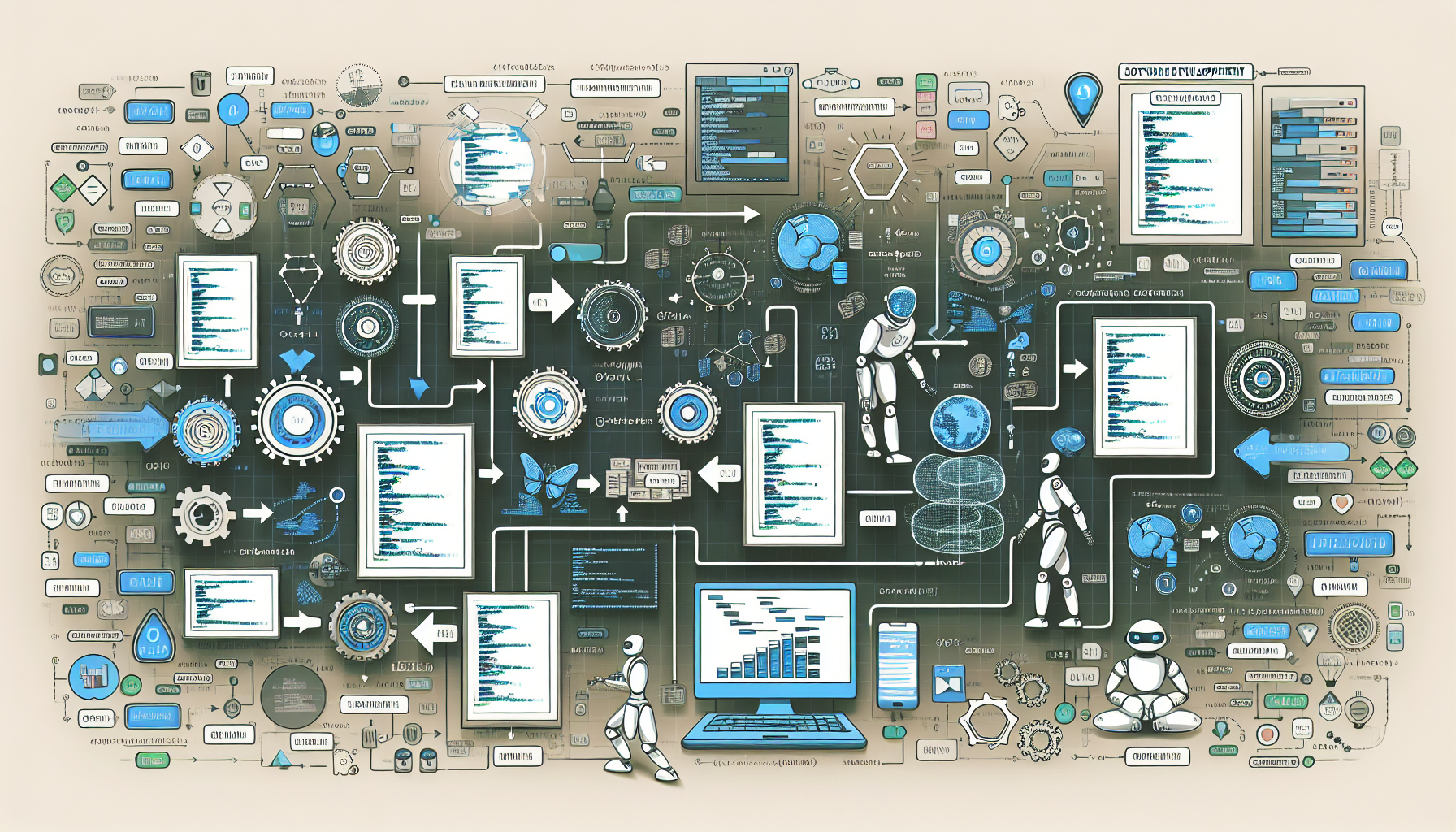
AI-Driven Development: How Artificial Intelligence is Changing the Software Development Life Cycle
Artificial Intelligence (AI) is revolutionizing many industries, and software development is no exception. From automating routine tasks to optimizing complex processes, AI technologies are transforming the Software Development Life Cycle (SDLC) in profound ways. Here, we explore the integration of AI into SDLC and how it enhances the efficiency and effectiveness of development practices.
Enhancing Traditional SDLC with AI
Planning and Requirements Gathering
- Predictive Analysis: AI algorithms analyze historical data to predict future trends, helping teams anticipate market demands and effectively plan new features.
- Natural Language Processing (NLP): Tools like chatbots help gather requirements by interacting with stakeholders in natural language, ensuring a comprehensive understanding of project needs.
Design
- Automated Design Generation: AI tools can automatically generate basic design architectures based on specified requirements, accelerating the design phase.
- Enhanced User Experience (UX) Design: AI-driven analytics tools measure user interactions and feedback to iteratively improve the UX design.
Implementation
- Code Autocompletion and Generation: AI-powered development environments offer sophisticated code autocompletion and even generate code snippets, significantly reducing coding time and effort.
# Example of AI-based code generation
import tensorflow as tf

model = tf.keras.Sequential([
    tf.keras.layers.Dense(10, activation='relu'),
    tf.keras.layers.Dense(1)
])

model.compile(optimizer='adam', loss='mean_squared_error')
Testing
- Automated Testing: AI tools automate the creation of test cases and execute them, providing rapid feedback.
- Predictive Bug Fixing: AI models predict potential bugs based on code patterns, which can be addressed preemptively.
Deployment and Maintenance
- Predictive Maintenance: AI systems forecast potential system failures or downtime, allowing preemptive action to avoid disruptions.
- Real-time Monitoring: AI-driven monitoring tools track applications in real-time, ensuring optimal performance.
AI’s Role in Enhancing Developer Productivity
AI not only assists in the automating mundane tasks but also supports developers in making strategic decisions, learning from existing data, and continuously improving processes. By effectively integrating AI tools across the SDLC, organizations can achieve:
- Faster time-to-market
- Higher quality software
- Reduced development costs
- Improved customer satisfaction
Conclusion
The integration of AI into the software development lifecycle heralds a significant shift towards more efficient and innovative development practices. As technology evolves, AI’s role in software development is set to expand, promising exciting advancements in how software is conceived, developed, and maintained.