The Future of Cybersecurity Training: Using VR and Simulation for Realistic Attack Response Scenarios
Introduction
Cybersecurity has become a central aspect of IT strategy due to the increasing prevalence of digital threats. Traditional training methods often fall short in preparing for the dynamic nature of cyber attacks. The advent of Virtual Reality (VR) and advanced simulation technologies is revolutionizing this critical training area.
Why VR and Simulations for Cybersecurity Training?
Enhanced Immersion and Realism
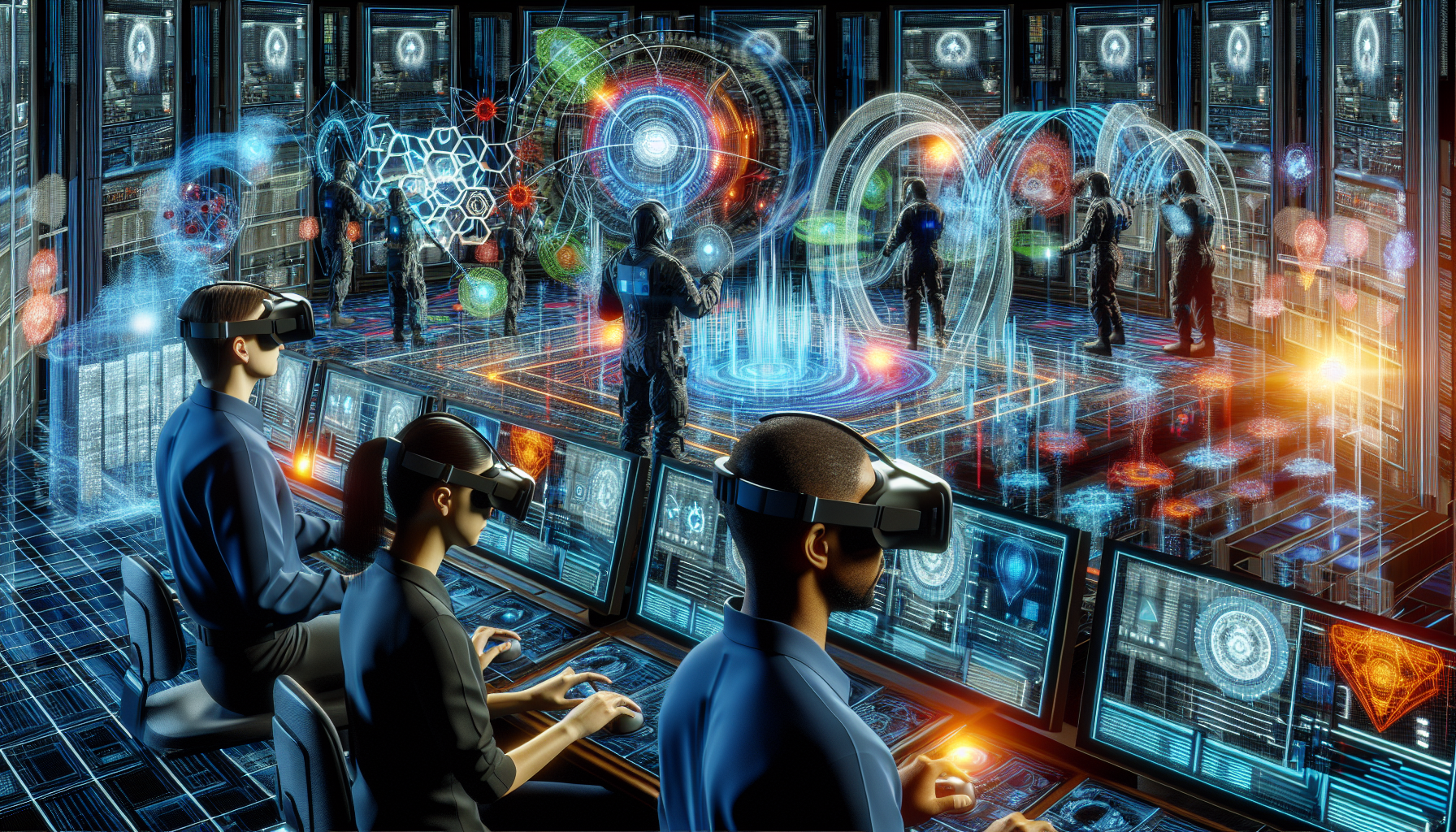
Using VR for cybersecurity training encompasses a level of immersion that traditional methods can’t match. Trainees find themselves in lifelike scenarios where they can interact with digital assets and react to threats in real-time.
Safe Environment Testing
VR and simulation environments allow cybersecurity professionals to:
- Engage in risk-free scenarios where they can experiment with different security strategies
- Fail safely without any real-world repercussions, which is critical for learning
Scalability
Simulations can be rapidly adjusted to include new, emerging threats and tactics, making sure that the training is always up to date.
Implementation in Cybersecurity Training
Current Uses in the Industry
Organizations are increasingly incorporating VR and simulation systems to train personnel in a variety of scenarios:
- Phishing attack detection
- Network security management
- Response to ransomware
Future Potential
As the technology matures, VR and simulation will likely become more sophisticated, involving AI to create adaptive attack scenarios that mimic real-world incidents even more closely.
Advantages of VR and Simulation-based Training
-
Realistic Scenarios: Trainees can experience complex cyber threat environments that are difficult to replicate in a classroom or a simple computer-based setup.
-
Instant Feedback: VR setups can offer immediate feedback on a trainee’s decisions, allowing for quick learning and adaptation.
-
Greater Engagement: The exciting nature of VR helps in maintaining high engagement levels among trainees.
Conclusion
The future is promising for VR and simulation in cybersecurity training. With these technologies, organizations can prepare their cybersecurity professionals in an effective, engaging, and highly realistic manner. As threats evolve, so will the methods to fight them, and VR is at the forefront of this evolution.